
Organisers
- Dr Aleksandar Staničić (TU Delft, Faculty of Architecture and Built Environment)
- Dr Jovan Pešalj (Leiden University, Faculty of Humanities, International Studies)
- Dr Vincent Chang (Leiden University, Faculty of Humanities, Institute for Area Studies)
Urban planners, architects and policymakers often assume that well‑designed public spaces foster social cohesion, encourage everyday encounters and support migrant integration. This assumption is reinforced by work across urban planning and architecture showing that the built environment shapes social life, from Wirth’s early argument that urban density shapes interaction and tolerance, to the myriads of recent architectural studies showing how built environment mediates visibility, belonging and identity. But this raises a contrary perspective: can public space also consolidate ethnic communities into ethnic enclaves or ghettos, reinforce separation or even hinder integration? After all, decisions about design, zoning and representation can open pathways to participation or, just as easily, deepen boundaries and exclusions. Understanding how public space contributes to these patterns is essential for grasping the lived realities of community formation and migrant integration in contemporary European cities.
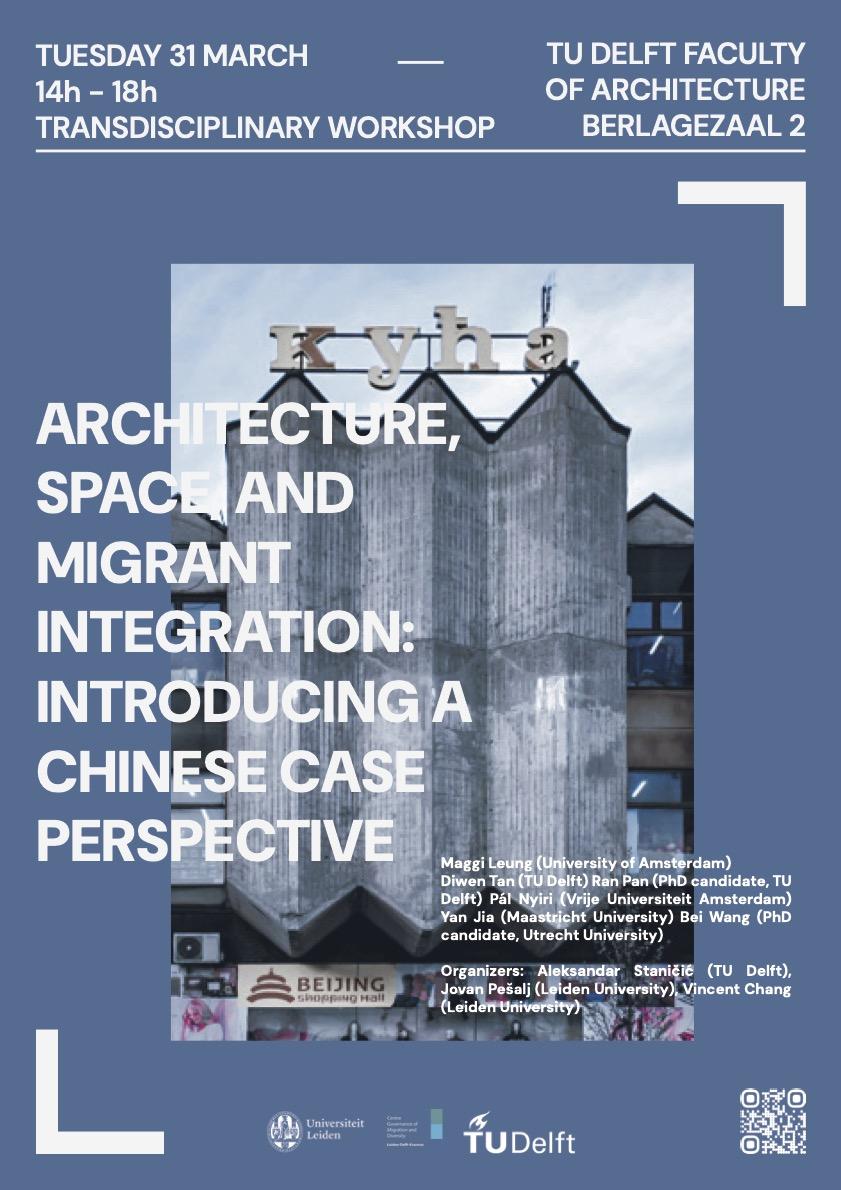
This workshop turned to an illustrative but underexamined case: Chinese diaspora in Europe. Despite their long presence and demographic significance, Chinese communities remain marginal in debates on urban diversity, integration and planning, while presenting a familiar paradox: a strong desire for integration coexists with an equally strong commitment to maintaining a distinct sense of “Chineseness.” Public spaces such as Chinese markets, commercial clusters and old and new Chinatowns offer a useful lens into this tension. A first set of questions explored who shapes these quarters – municipal authorities, private developers, Chinese community organisations or even state representatives – and what aims guide their spatial interventions and adaptations and how these are negotiated. A second set considered their consequences: how the resulting built environments influence visibility, identity and belonging, and whether such spaces function as ethnic enclaves, engines of integration or hybrid transnational zones that sit uneasily between the two. By tracing both the making of these spaces and their social effects, the workshop aimed to examine how spatial intervention and adaptations shapes community formation, migrant identity and integration across contemporary European cities.
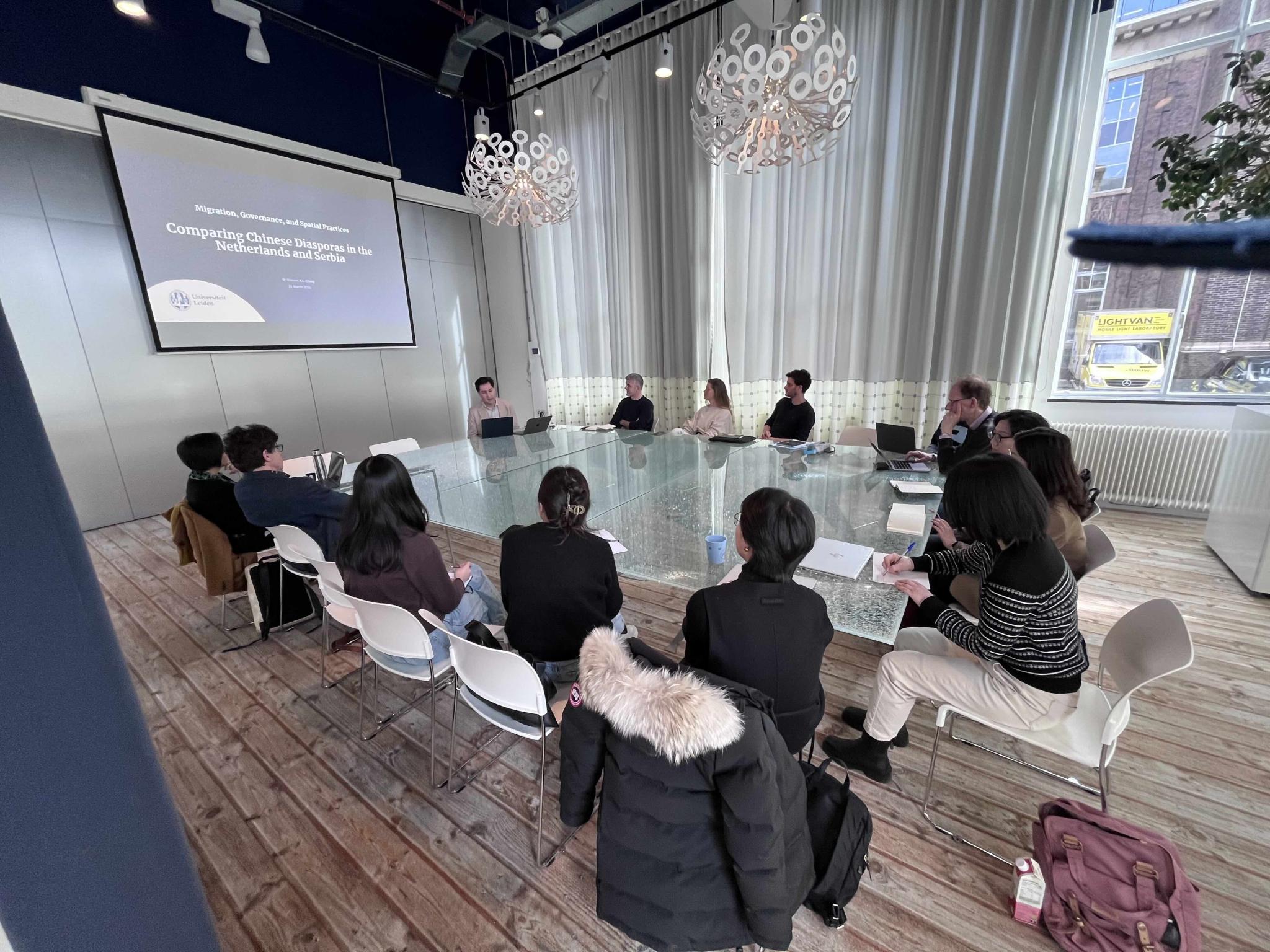
The workshop opened with welcoming remarks by Reinout Kleinhans, who, on behalf of Delft University of Technology and Leiden-Delft-Erasmus Global Migration and Diversity, welcomed the participants and outlined the objectives, context, and scope of the LDE-GMD Seed Fund initiative. Representing the organizing team, Aleksandar Staničić introduced the central theme of the workshop by reflecting on the production of meaningful urban spaces in relation to migrant integration. Jovan Pešalj followed with a presentation addressing the tensions between migration, space, identity, integration, and transnationalism, while Vincent K.L. Chang offered a comparative analysis of the governance structures and spatial practices associated with Chinese diasporic communities in the Netherlands and Serbia.
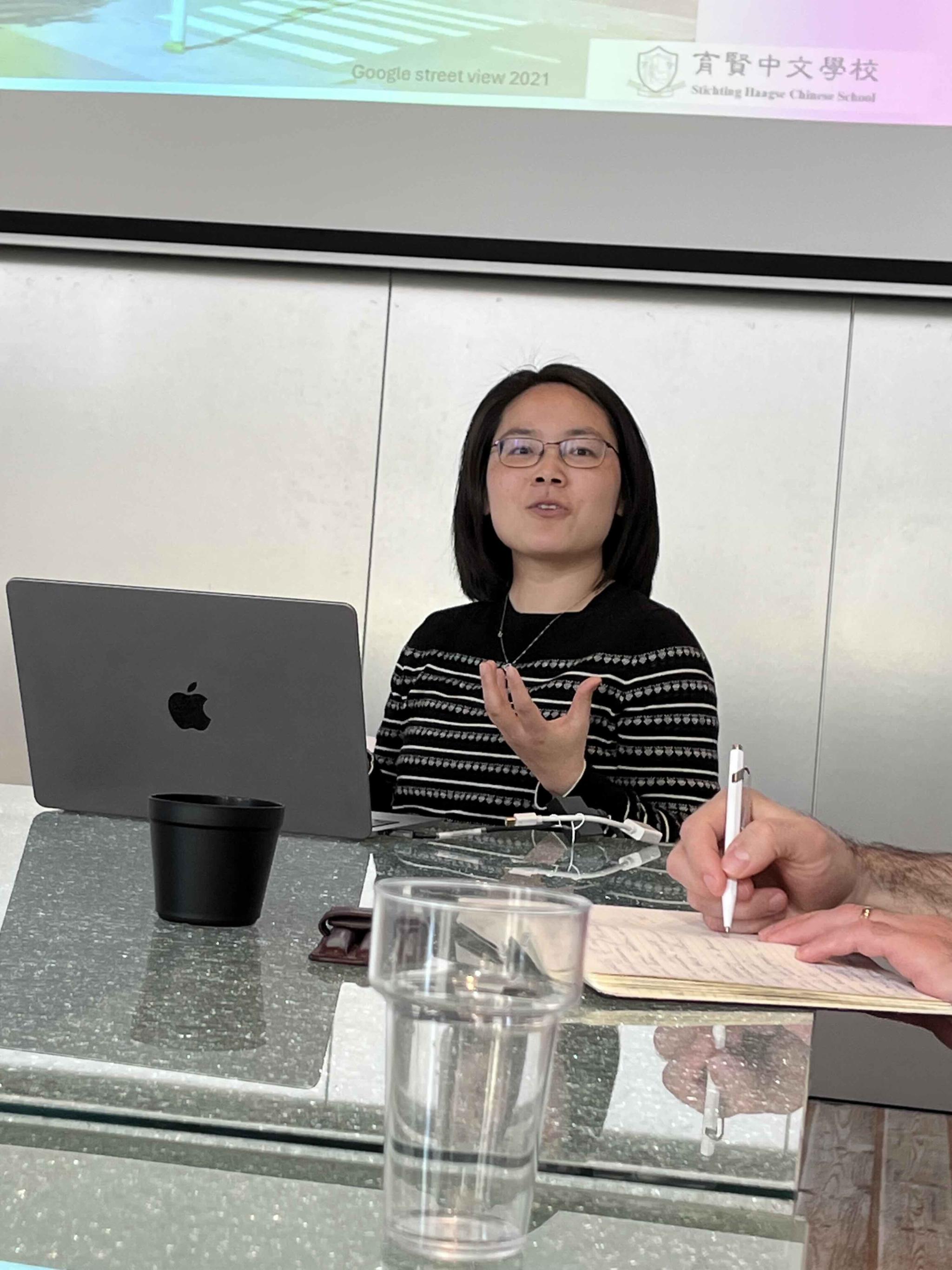
The second part of the program began with a keynote lecture by Maggi Leung, who examined the urban citizenship practices of Chinese students in Amsterdam beyond the conventional framework of Chinatown. This was followed by a presentation from Diwen Tan on spatial experiences within multicultural urban environments, and a session by Ran Pan titled Gestures of the Grass. Pál Nyíri then provided a long-term historical and spatial perspective on Chinese migration to Hungary, after which Yan Jia explored the construction of “Chineseness” in public space through Chinese supermarkets and cultural performances. The workshop concluded with a presentation by Bei Wang, who reflected on the “invisible walls” and shifting forms of identity experienced throughout the trajectory of contemporary migration and settlement.
Summary of the discussion
Building on the theoretical framework introduced during the presentation, the workshop discussions opened several directions for future research. First, participants emphasized the need to investigate how different migration histories, governance structures, and political contexts shape the production of Chinese neighbourhoods, markets, and Chinatowns. This includes examining which actors are involved in producing these spaces, what objectives they pursue, and how cooperation unfolds between state institutions, local governments, business actors, migrant communities, and sending states.
Second, participants stressed the importance of studying how these spaces influence expressions of “Chineseness,” belonging, exclusion, and community interaction once they have been established. This involves examining how Chinatown environments shape external perceptions of Chinese migrants while also potentially obscuring internal heterogeneity and reinforcing essentialized cultural narratives. Questions of self-Orientalism, cultural performance, and symbolic representation emerged as particularly relevant in this regard.
Third, the workshop highlighted the need to investigate how newer generations of Chinese migrants and other Chinese actors attempt to move away from the identities and stigmas associated with traditional Chinatown forms. This includes exploring the alternative spaces, institutions, and cultural practices they create in response. Such an approach would broaden the analytical focus beyond Chinatown itself while still retaining it as a crucial reference point for understanding broader transformations in Chinese migrant spatialities and identity politics.
From an architectural point of view, future research could further examine how Chinese architectural firms collaborate with local architects, planners, developers, and state actors in the realization of overseas projects. Particular attention could be given to the ways architectural norms, political symbolism, and spatial meanings are translated, interpreted, and standardized across different cultural and regulatory contexts. Such work may also explore who participates in imagining, designing, and constructing the spatial presence of the “sending” state, as well as how expertise, authority, and decision-making are negotiated among different actors involved in these processes.
Another promising direction would be to investigate how local actors reshape or reinterpret forms of “Chinese-ness” through material choices, aesthetics, labor practices, and construction processes. Research could focus on the practical dimensions of spatial production, including the sourcing of materials, the circulation of craftsmanship and technical expertise, and the roles played by contractors, workers, and users in shaping the built environment beyond official plans and top-down agendas.
Further studies could also move beyond large-scale symbolic projects to examine microspaces and everyday forms of adaptation, appropriation, and symbolic reinterpretation within transnational architecture. Methodological approaches such as spatial mapping, storytelling, and documenting lived experiences may offer productive ways to understand how these spaces acquire meaning through everyday interaction and use.
Overall, the workshop demonstrated that the tensions surrounding Chinatown are not obstacles to research but valuable analytical entry points. The discussions revealed how spatial forms associated with Chinese migration remain deeply entangled with questions of identity, representation, hierarchy, stigma, and belonging. Rather than treating Chinatown as an outdated or self-explanatory category, the workshop suggested approaching it as a contested and evolving terrain through which broader transformations in migration, urban space, and transnational identity can be critically examined.
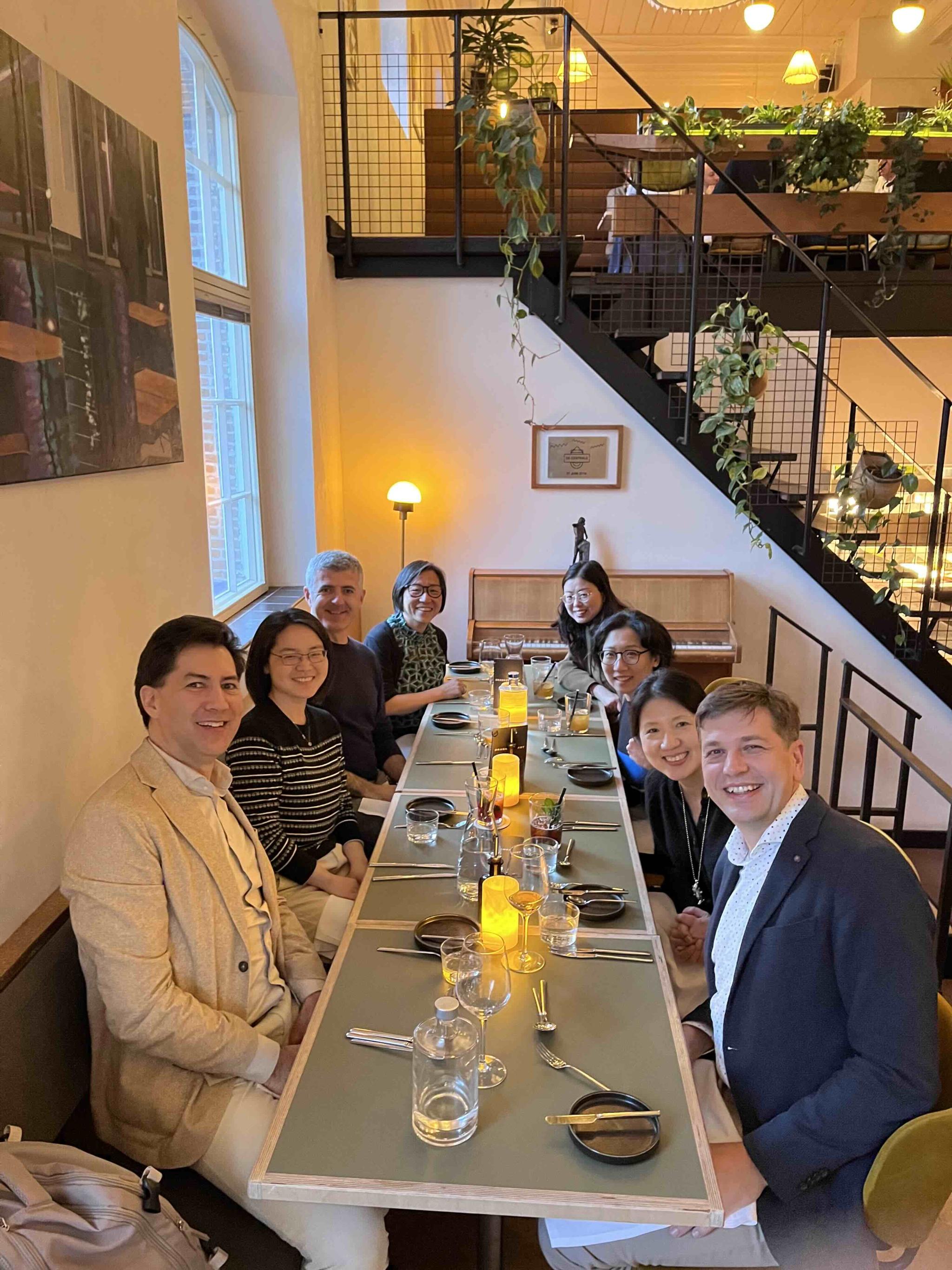
Acknowledgement: This event is sponsored by the LDE–GMD 2026 Seed fund.